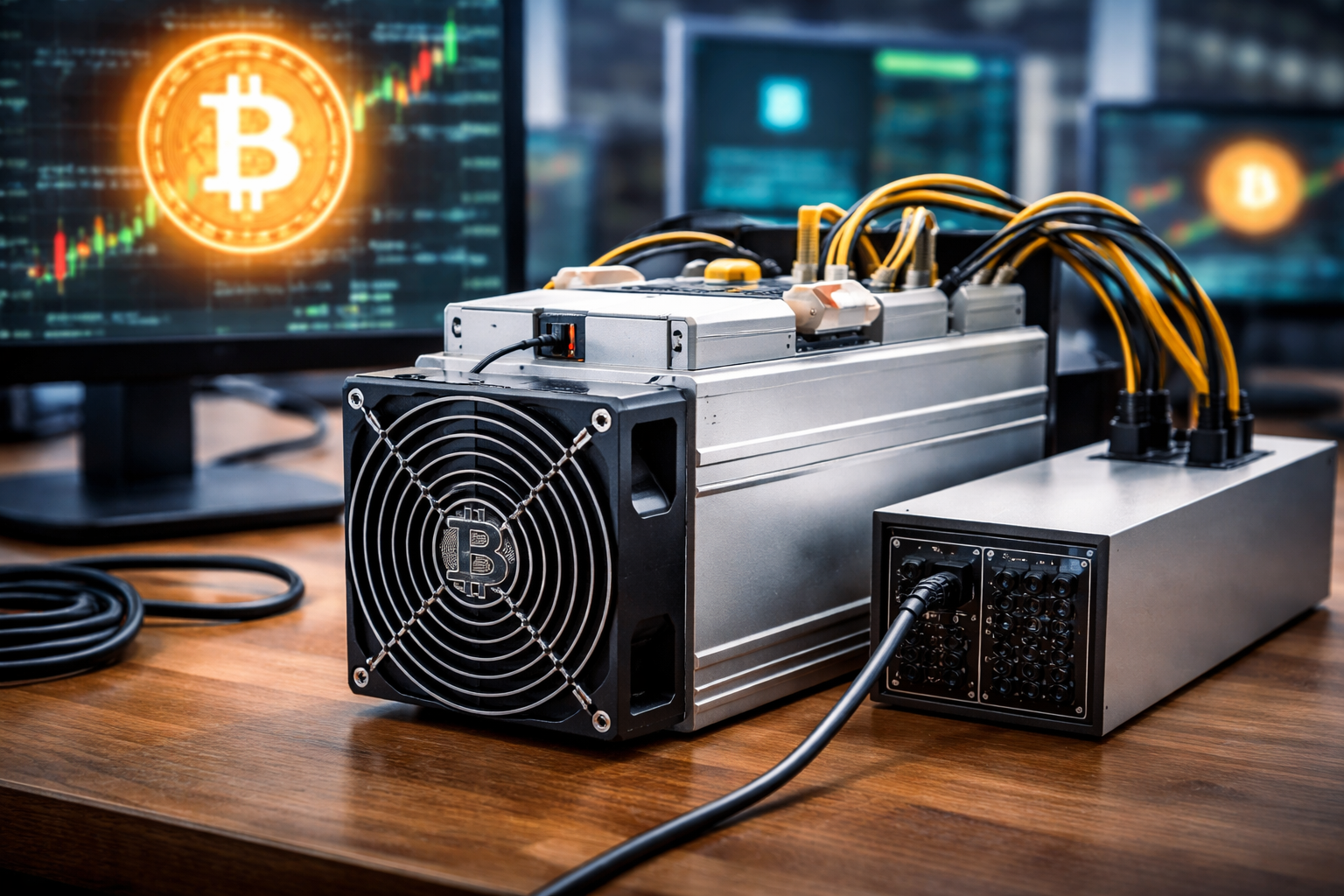
Bitcoin mining has evolved dramatically over the years. Today, mining Bitcoin competitively requires specialized hardware called an ASIC miner.
In this guide, you will learn exactly how to set up an ASIC miner, connect it to a mining pool, configure the software, and evaluate profitability before you invest.
If you are serious about understanding Bitcoin mining, this step by step walkthrough will help you avoid costly mistakes.
What You Need to Start Mining Bitcoin
To mine Bitcoin using an ASIC miner such as the Antminer S9, you need just a few essential components:
- An ASIC miner
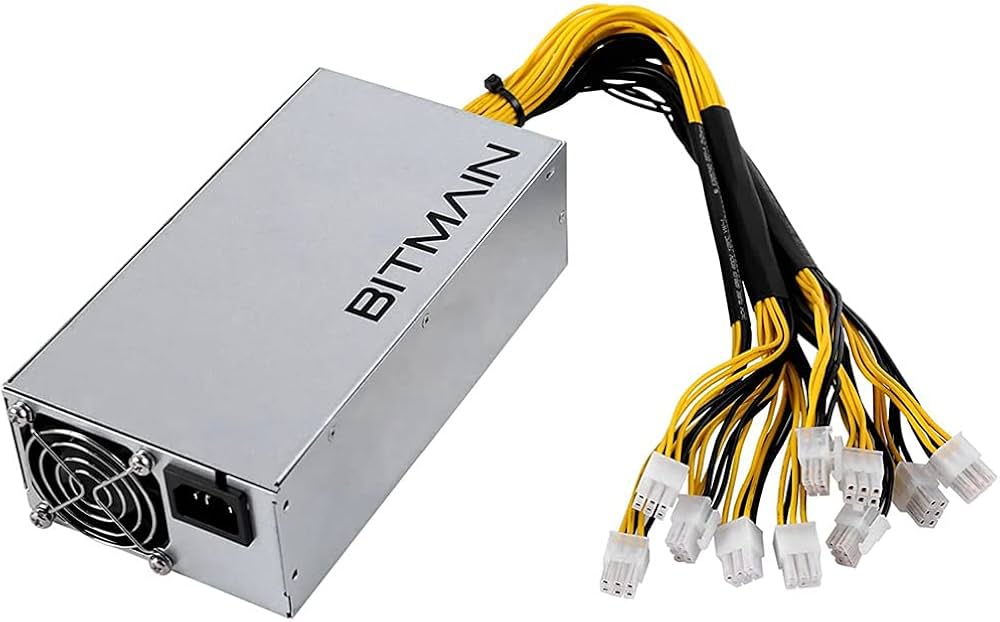
- A compatible Power Supply Unit or PSU
- Ethernet cable
- Power cables for the PSU
- A router with internet access
- A fire extinguisher for safety
You cannot mine Bitcoin with WiFi only. ASIC miners must be connected directly to your router using an Ethernet cable.
Before powering anything on, always confirm that your PSU is compatible with your specific miner model. If unsure, contact the manufacturer or supplier.
Understanding ASIC Miners
ASIC stands for Application Specific Integrated Circuit.
Unlike a regular computer, an ASIC is designed to perform one task extremely well. In this case, mining Bitcoin using the SHA256 algorithm.
A typical ASIC miner includes:
- Ethernet port
- Multiple power input ports
- High powered cooling fans on both sides
- Pre installed mining firmware
These machines are loud. Very loud. Do not place them in a bedroom unless you want permanent white noise.
Step 1: Unboxing and Hardware Setup
When you unbox your ASIC miner, you will typically find:
- The miner unit
- Basic setup instructions
Most modern units do not include much else.
Connect the Hardware
- Plug the PSU into the ASIC miner using the provided power connectors.
- Connect the Ethernet cable from the miner directly into your router.
- Ensure all power cables are securely connected.
- Plug the PSU into the wall outlet.
Once powered on, the fans will spin at high speed during startup. This is normal.
You will see indicator lights confirming that the device is powered and connected to the network.
At this point, the hardware setup is complete.
Step 2: Accessing Your Miner Through Your Router
To configure the miner:
- Log into your home router.
- Locate the list of connected devices.
- Identify your ASIC miner by its wired connection.
- Copy its local IP address.
- Enter that IP address into your browser.
You will be prompted to log into the miner interface. Default credentials are often:
- Username: root
- Password: root
Immediately change your password after logging in for security reasons.
Step 3: Connecting to a Mining Pool
Mining solo is nearly impossible for small scale miners. Instead, you join a mining pool.
One popular pool is NiceHash.
Pool Setup Process
- Select the SHA256 algorithm for Bitcoin.
- Choose a server location closest to you.
- Generate a stratum URL.
- Enter the stratum URL into your miner’s pool settings.
- Add backup pools in case the primary one goes offline.
Your worker ID will usually be your Bitcoin wallet public address.
Step 4: Linking Your Wallet
To receive payouts, you need a Bitcoin wallet address.
You can use platforms like Coinbase to generate a Bitcoin public address.
Important reminders:
- Never share your private key.
- Double check the wallet address before saving.
- Sending Bitcoin to the wrong address can permanently destroy your funds.
After entering your wallet address into the mining pool settings, click save and apply.
Your miner will restart and begin hashing.
Step 5: Monitoring Mining Status
Inside the miner dashboard, you will see:
- Active pool URLs
- Hash rate
- Accepted shares
- Hardware status
Within a few minutes, your miner should begin submitting shares to the pool.
Revenue typically accumulates gradually. At first, you might see only a few cents earned.
This is normal.
Is Bitcoin Mining Profitable?
Before buying an ASIC miner, always run profitability calculations.
Websites like CoinWarz allow you to estimate:
- Hash rate
- Power consumption
- Electricity cost
- Hardware cost
- Bitcoin price
- Mining difficulty
Key Profit Variables
- Electricity cost
- Bitcoin price
- Network difficulty
If electricity costs are high, mining may be unprofitable. For example:
- At $0.07 per kWh, mining might be marginally profitable.
- At $0.14 per kWh, you may lose money.
- If Bitcoin price rises significantly, profitability increases.
- If mining difficulty rises, profitability decreases.
Mining is highly sensitive to these variables.
Always perform a sensitivity analysis before purchasing hardware.
Understanding Payout Thresholds
Mining pools often have minimum payout thresholds.
For example:
- Lower thresholds if using internal pool wallets
- Higher thresholds if using external wallets
Be sure to read the withdrawal rules carefully. Some pools restrict payout windows to certain times.
This is often overlooked by beginners.
Realistic Expectations
ASIC mining is simple from a setup perspective because:
- Software is pre installed
- Configuration is web based
- No operating system installation required
However, profitability is not guaranteed.
In many locations with high electricity costs, mining Bitcoin using an ASIC miner may result in losses unless:
- Bitcoin price increases
- Electricity is very cheap
- You have industrial scale operations
Important Safety Tips
- Always keep a fire extinguisher nearby
- Ensure proper ventilation
- Do not overload electrical circuits
- Avoid running miners on extension cords
ASIC miners draw significant power. Blown fuses are common if circuits are overloaded.
Final Thoughts on Mining Bitcoin with ASICs
Mining Bitcoin with an ASIC is straightforward:
- Connect hardware
- Log into the miner
- Configure mining pool
- Enter wallet address
- Monitor profitability
While the setup process is simple, the economics are complex.
Do not buy an ASIC miner without:
- Calculating profitability
- Understanding electricity costs
- Reviewing mining pool payout rules
- Running scenario analysis
Mining is competitive. It rewards preparation, not impulse decisions.
In the next stage of your crypto journey, you may explore mining other cryptocurrencies using GPUs, which involves more software configuration but can offer different opportunities depending on network competition.
If you approach this strategically, you will avoid costly mistakes and understand exactly how the ASIC mining process works from start to finish.



Leave A Comment