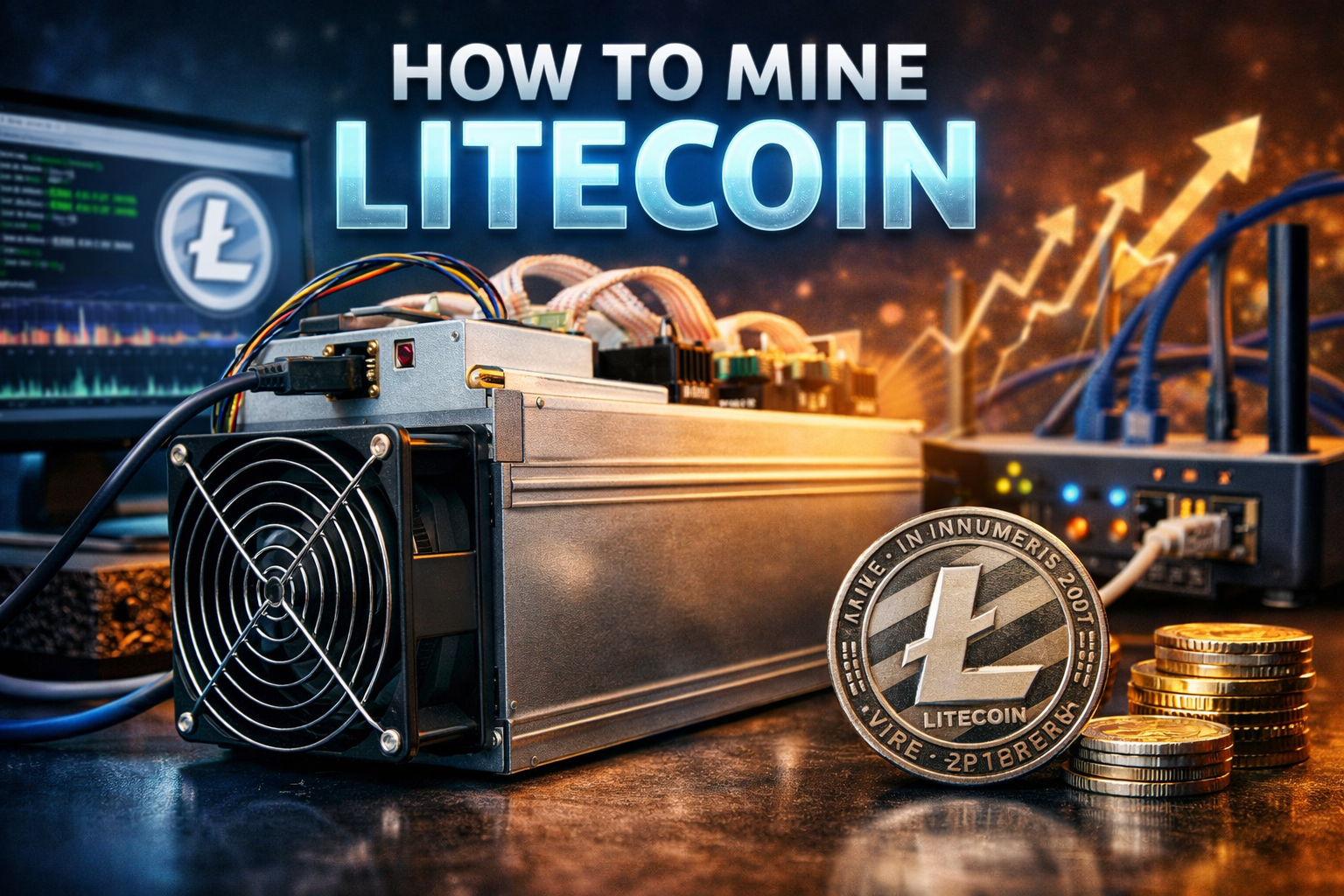
Litecoin is one of the earliest and most well known cryptocurrencies, often described as the silver to Bitcoin’s gold.
If you are interested in mining Litecoin, this post will walk you through the hardware, software, setup process, mining pools, and profitability considerations.
If you have already mined Bitcoin before, you will notice that the Litecoin mining process is very similar, with a few important differences.
What Is Litecoin Mining?
Litecoin mining is the process of validating transactions and securing the Litecoin network using specialized hardware called ASIC miners.
In return, miners receive newly created Litecoin as a reward.
While the process resembles Bitcoin mining, Litecoin uses a different hashing algorithm, which means you cannot use the same mining hardware for both coins.
Litecoin Mining Algorithm: Scrypt vs SHA 256
Bitcoin uses the SHA 256 algorithm.
Litecoin uses the Scrypt algorithm.
This difference is critical because:
- SHA 256 ASIC miners cannot mine Litecoin.
- You must purchase a Scrypt compatible ASIC miner specifically designed for Litecoin and other Scrypt based coins.
When shopping for hardware, always confirm that the miner supports Scrypt.
Best Hardware for Mining Litecoin
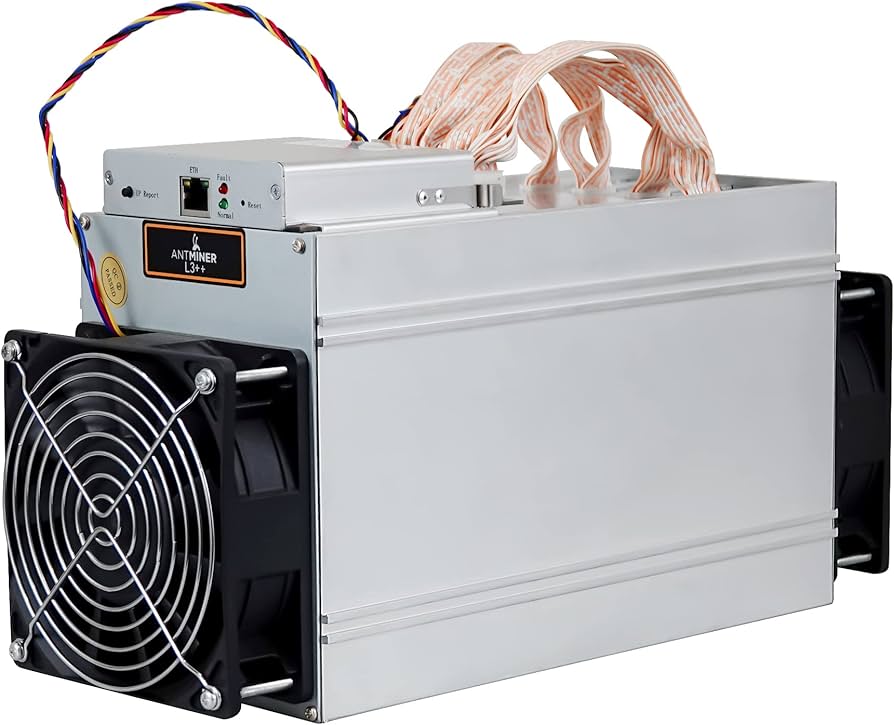
One of the most common places to purchase Litecoin ASIC miners is Bitmain. You may also find units on Amazon or other reputable retailers.
For Litecoin mining, look for:
- Scrypt ASIC miners such as the Antminer L series
- Appropriate power supply unit also called PSU
- Ethernet cable for router connection
Example specifications of a Scrypt miner:
- 504 MH per second hash rate
- Around 800 watts of power consumption
Always verify:
- The PSU supports the correct wattage
- The cables are compatible
- The hardware is authentic
If unsure, contact the seller or manufacturer directly.
How Much Does It Cost to Mine Litecoin?
Profitability depends on:
- Hardware cost
- Electricity cost
- Litecoin price
- Mining difficulty
You can use mining calculators such as CoinWarz to estimate profitability.
For example:
- If your miner costs 548 dollars
- Generates 504 MH per second
- Uses 800 watts of electricity
It may take over a year to break even depending on your electricity rates and Litecoin’s market price.
Always run your own numbers before purchasing hardware.
How to Set Up a Litecoin ASIC Miner
The setup process is very similar to setting up a Bitcoin ASIC miner.
Step 1: Connect Hardware
- Connect PSU cables to the ASIC miner
- Connect the Ethernet cable from the miner to your router
- Plug the PSU into a power outlet
Important:
ASIC miners are very loud. Do not place them near your bedroom. Ensure proper ventilation and keep a fire extinguisher nearby for safety.
Step 2: Log Into Your Router
To configure your miner:
- Type your router’s IP address into a web browser.
- Log in using your router credentials.
- Locate the IP address assigned to your ASIC miner.
If you do not know your router’s IP address:
- Search your router model online.
- Look up default login credentials.
Step 3: Access the ASIC Miner Interface
- Open a new browser tab.
- Enter the miner’s IP address.
- Log in using the default credentials provided with the device.
Often the default login is:
Username: root
Password: root
Once inside:
- Click on Miner Configuration.
Choosing a Litecoin Mining Pool
Mining solo is extremely difficult. Most miners join a mining pool.
One recommended pool is:
LitecoinPool.org
Other pools such as NanoPool may also support Litecoin, but LitecoinPool.org is widely used.
How to Set Up LitecoinPool.org
- Visit LitecoinPool.org.
- Click Join.
- Create a username, password, and email.
- Log into your account.
- Go to My Account.
- Locate your Worker Name.
Next:
- Copy your worker credentials.
- Paste them into the Worker field in your ASIC Miner configuration page.
- Go to the Help section of LitecoinPool.org.
- Copy the Stratum server address.
- Paste it into the pool configuration field in your miner.
Save your settings.
Your miner will now begin hashing and submitting shares to the pool.
Receiving Your Litecoin Rewards
All mined Litecoin goes directly to your mining pool account.
Once you reach the minimum payout threshold, typically 0.01 Litecoin, you can transfer your funds to:
- A hardware wallet
- A software wallet
- A cryptocurrency exchange
Always prioritize security and consider using a cold wallet for long term storage.
Key Differences Between Bitcoin and Litecoin Mining
Although the setup process is similar, remember:
- Bitcoin uses SHA 256
- Litecoin uses Scrypt
- Different ASIC hardware is required
- Mining pools are different
Aside from those differences, configuration and networking steps are nearly identical.
Is Litecoin Mining Worth It?
Litecoin mining can be profitable if:
- Electricity costs are low
- Hardware is purchased at a good price
- Litecoin price trends upward
- You understand the long term economics
Before investing:
- Calculate your break even timeline
- Factor in noise, heat, and hardware depreciation
- Ensure your home electrical system can handle the load
Mining is both a technical and financial decision.
Final Thoughts
Mining Litecoin with an ASIC miner is straightforward once you understand:
- The Scrypt algorithm requirement
- Proper hardware selection
- Mining pool configuration
- Profitability analysis
If you have previously mined Bitcoin, transitioning to Litecoin mining will feel familiar.
Take your time, prioritize safety, run the numbers carefully, and approach mining as a long term strategic investment rather than a quick profit scheme.

Leave A Comment