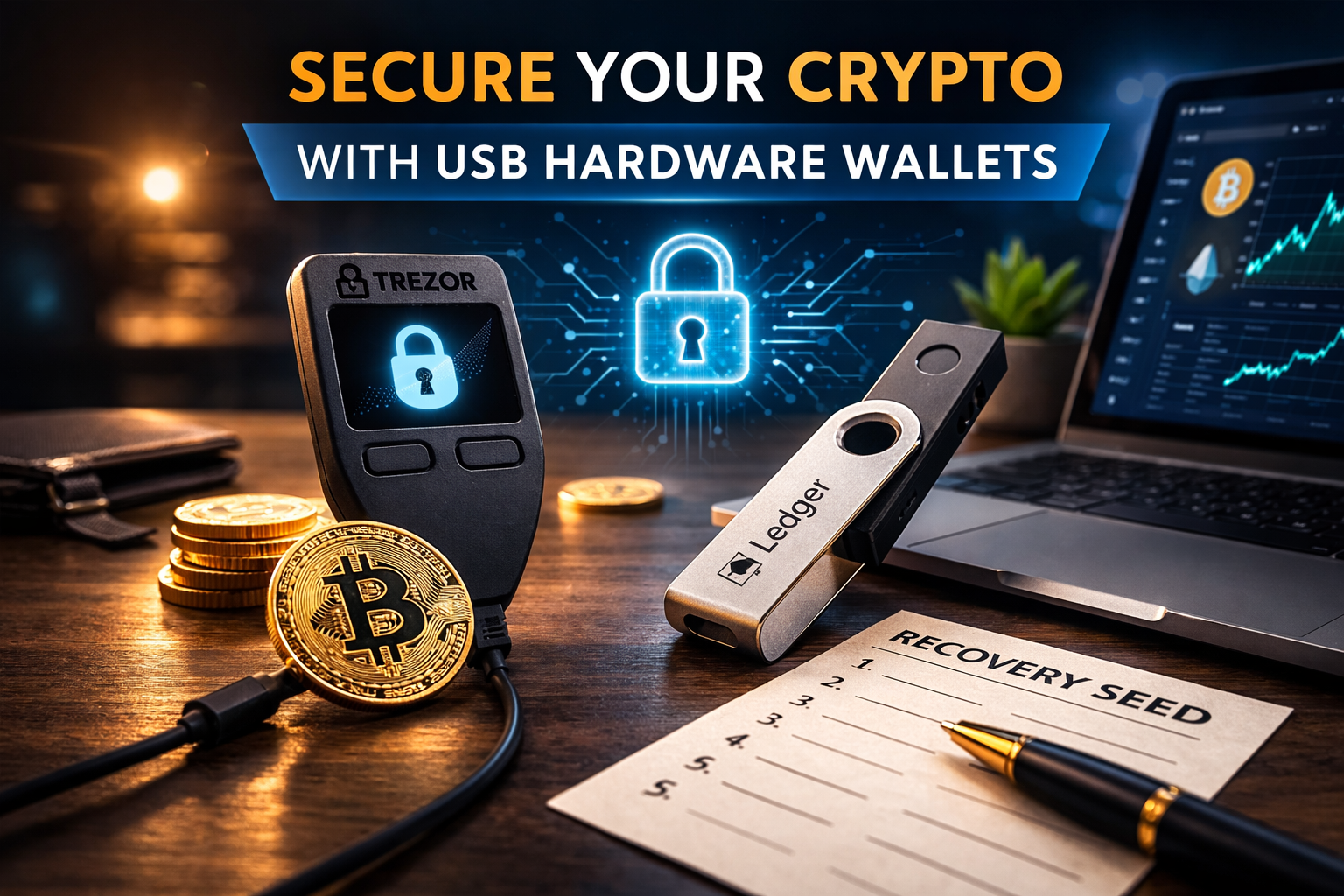

When it comes to securing your cryptocurrency, choosing the right wallet is one of the most important decisions you will ever make.
If you are serious about protecting your digital assets for the long term, a USB or hardware wallet is widely considered one of the safest and most secure storage solutions available today.
In this guide, we will break down what a hardware wallet is, why it exists, how it works, and the pros and cons of the most popular options like the Trezor Model One and the Ledger Nano S.
What Is a USB or Hardware Wallet?
A USB or hardware wallet is a physical device that securely stores your cryptocurrency private keys offline.
Unlike web wallets or software wallets, your private keys never leave the device. This dramatically reduces the risk of hacking.
These wallets look like small USB sticks. They are sealed in brand new packaging, often protected with hologram security stickers. This is critical.
Never use a hardware wallet that is not brand new and sealed.
Only purchase from trusted manufacturers or reputable retailers.
Avoid unknown third party sellers or second hand marketplaces. A tampered wallet can mean instant loss of funds.
Why Do Hardware Wallets Exist?
To understand why hardware wallets exist, we need to compare them to other wallet types.
1. Paper Wallets
Paper wallets use QR codes to store private keys. However, they often must be imported into a software wallet at some point to transact. This reintroduces risk.
2. Web Wallets
Web wallets are convenient but more vulnerable. Since they are connected to the internet, they are easier targets for hackers.
3. Hardware Wallets
Hardware wallets store your private keys inside a secure device. Transactions must be physically confirmed. Even if your computer is compromised, your private keys remain protected inside the wallet.
That extra layer of isolation is what makes hardware wallets superior for long term storage.
How Hardware Wallets Protect Your Crypto
Here is what makes USB wallets so powerful:
- Private keys are generated inside the device
- Keys never leave the hardware wallet
- Transactions require physical confirmation
- Many models include secure PIN entry
- Recovery seed phrases allow wallet restoration if lost
Some models even include screens that display wallet details, balances, and recovery phrases directly on the device. This allows you to verify transactions independently from your computer.
When you are not using your hardware wallet, simply unplug it. Keeping it disconnected when idle adds another layer of protection.
The Pros of Hardware Wallets
1. High Security
Hardware wallets are designed to resist malware and keyloggers. Even if your computer is infected, your crypto remains protected because the private keys are never exposed.
2. Long Term Storage Solution
If you plan to hold Bitcoin or other cryptocurrencies for years, hardware wallets are ideal. They function as cold storage devices.
3. Recovery Seed Protection
During setup, you generate a recovery phrase. If the device is lost or stolen, you can restore your funds using this seed phrase.
4. Built for Serious Investors
While hardware wallets cost money, they are affordable relative to the value of crypto assets they protect. Think of it as insurance for your digital wealth.
The Trezor Hardware Wallet
The Trezor Model One is one of the most respected hardware wallets in the industry.
Key Features
- Private keys generated inside the device
- Secure PIN entry system
- Passphrase protection
- Recovery seed functionality
- Can hold a large number of crypto keys
One of its unique security features is its PIN entry method. It prevents hackers and keyloggers from recording your PIN by scrambling the layout during entry. It may feel tedious, but it dramatically increases security.
The Trezor is best suited for long term storage rather than daily transactions.
The Ledger Nano S
The Ledger Nano S is a popular alternative.
Why Investors Like It
- Smart card security architecture
- Secure microprocessor similar to banking chip technology
- Works even on compromised computers
- Easy to use browser application
- Compatible with multiple third party services
The internal microprocessor technology has roots in banking systems. It is similar to the chip embedded in credit cards, built for secure cryptographic operations.
Many users consider the Ledger Nano S more convenient for daily usage compared to other hardware wallets.
The Cons of Hardware Wallets
No storage solution is perfect. Here are the drawbacks to consider.
1. Requires a USB Port
You must physically connect the device to a computer to use it. This limits mobility.
2. Not Ideal for Instant Transactions
Hardware wallets are not as convenient as mobile or web wallets for quick, everyday transactions.
3. Browser or Software Dependency
Some devices require specific applications or browser extensions to operate. This adds an extra setup step.
However, these limitations are minor compared to the security benefits.
Hardware Wallets vs Web Wallets
Web wallets such as exchange wallets are convenient but more vulnerable. Because they are connected to the internet and managed by third parties, they are easier to hack.
Paper wallets lack the additional authentication layers that hardware wallets provide.
For storing large amounts of Bitcoin or other cryptocurrencies, hardware wallets are significantly safer.
Are Hardware Wallets Worth It?
If you are investing serious money into crypto, the answer is yes.
Hardware wallets like the Trezor Model One and the Ledger Nano S provide strong security, reliable recovery options, and peace of mind.
While no wallet is 100 percent safe in the crypto world, hardware wallets offer one of the highest levels of protection available to retail investors.
Final Thoughts
If you are building long term wealth in cryptocurrency, security must come first.
Buy only sealed hardware wallets from trusted sources.
Keep your recovery phrase offline and secure.
Unplug your device when not in use.
Hardware wallets are not just accessories. They are foundational tools for serious crypto investors who want to protect their digital assets from hackers and unnecessary risk.
Security first. Always.


Leave A Comment