
Introduction to Bitcoin

In this post, we explore three essential questions:
- What is Bitcoin
- Why does Bitcoin exist
- What are the pros and cons of Bitcoin
If you are already highly familiar with Bitcoin, you can skip ahead to deeper investment analysis.
However, if you want a structured, high level understanding before diving into long term investment frameworks, this guide will give you clarity.
After understanding the fundamentals, investors can evaluate Bitcoin more intelligently and compare it with other cryptocurrencies.
What Is Bitcoin?

Bitcoin is a digital currency that operates on a blockchain, which is a decentralized digital ledger that records transactions across a distributed network of computers.
The first block in the Bitcoin blockchain is known as the Genesis Block, created by the mysterious founder Satoshi Nakamoto.
To this day, the identity of Satoshi remains unknown. It could be a person, a group of developers, or a pseudonym.
Some have speculated, that it is Epstein, which is pure hogwash.
While Bitcoin was designed as a peer to peer digital currency, today it is often treated more like a commodity or digital gold rather than a day to day payment currency.
Why Does Bitcoin Exist?
To understand why Bitcoin exists, we must look at the environment in which it was created.
Bitcoin emerged after the 2008 global financial crisis, a period when trust in traditional financial institutions declined.
The core mission behind Bitcoin was to:
- Enable borderless peer to peer transactions
- Remove intermediaries such as banks
- Democratize commerce
- Reduce reliance on fiat currencies
Bitcoin allows individuals to send value anywhere in the world without relying on central authorities.
This makes it attractive for:
- International remittances
- Hedging against inflation
- Protection during geopolitical uncertainty
- Storing value digitally
Over time, Bitcoin has evolved into what many investors consider digital gold due to its fixed supply and decentralized nature.
A Brief History of Bitcoin

Although Bitcoin was the first mainstream cryptocurrency, earlier digital currency experiments existed, such as Bit Gold and B Money.
However, Bitcoin was the first to successfully solve the double spending problem in a decentralized way.
Bitcoin initially gained notoriety due to its association with Silk Road, a darknet marketplace where illegal goods were traded using Bitcoin.
Silk Road was shut down in October 2013.
Despite this early controversy, the overwhelming majority of Bitcoin users today do not use it for illicit purposes.
Like any new technology, unintended use cases emerged during its infancy.
Over time, Bitcoin matured into a legitimate asset class with institutional interest and global adoption.
The Pros of Bitcoin
1. First Mover Advantage
Bitcoin was the first mainstream cryptocurrency.
This gives it brand recognition and historical credibility that newer cryptocurrencies lack.
2. Largest Market Capitalization
Bitcoin has the largest market capitalization in the cryptocurrency sector, which adds to its perceived stability relative to smaller coins.
3. Broad Acceptance
Almost every cryptocurrency exchange supports Bitcoin.
Most wallets support it as well. This makes it the most accessible crypto asset.
4. Borderless and Decentralized
Bitcoin operates without central control.
Anyone with internet access can transact globally.
5. Large and Resilient Community
Bitcoin has one of the largest developer and user communities in the crypto world.
A strong community increases the probability of long term survival.
6. Digital Hedge Against Fiat Devaluation
Many investors view Bitcoin as protection against inflation and fiat currency debasement.
In this way, it is often compared to gold.
The Cons of Bitcoin
1. High Volatility
Bitcoin is highly volatile. Price swings can be extreme and rapid.
This makes it risky for short term investors.
2. Scalability Limitations
Bitcoin blocks are mined approximately every 10 minutes and are limited to about 1 megabyte in size.
This limits transaction throughput to roughly 3 to 7 transactions per second.
When demand rises, transaction fees increase because miners prioritize higher fee transactions.
3. Higher Transaction Fees
Compared to some newer cryptocurrencies, Bitcoin transaction fees can be relatively high during periods of network congestion.
4. Regulatory Risk
Because Bitcoin is borderless and decentralized, governments may view it as a threat to monetary sovereignty or national security.
Regulatory uncertainty remains a risk.
5. Consensus Challenges
Bitcoin has a very large developer community.
While this is a strength, it can also slow decision making.
Disagreements can lead to forks, where new cryptocurrencies branch off from the original Bitcoin protocol.
6. Not Universally Accepted by Financial Professionals
Many traditional financial advisors and institutions still approach Bitcoin cautiously.
Adoption among mainstream financial professionals remains uneven.
Bitcoin vs The Next Generation of Cryptocurrencies
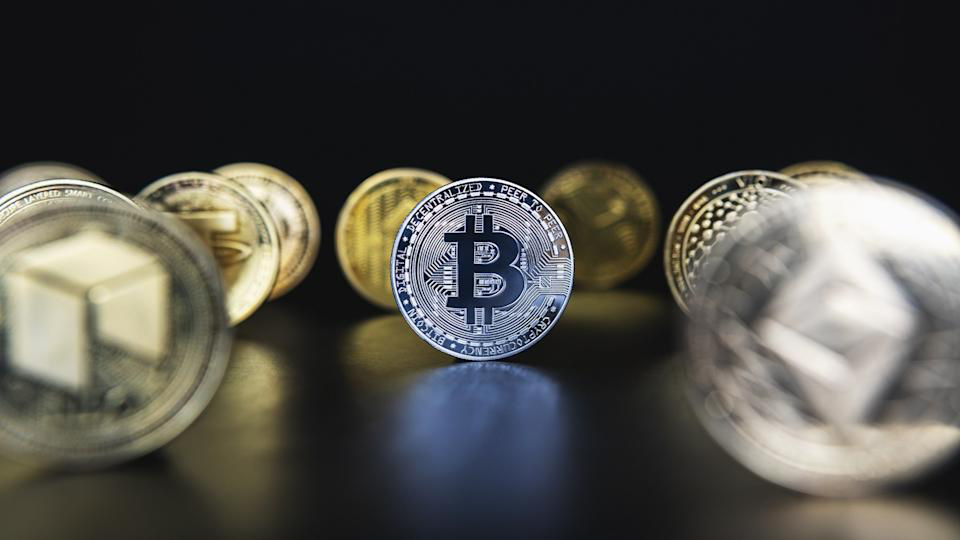
When Yahoo was created, it organized the internet manually using categories.
Then Google introduced a superior search algorithm that changed everything.
In crypto, Bitcoin has first mover advantage.
However, future cryptocurrencies may address Bitcoin’s scalability and efficiency limitations.
The question many long term investors ask is:
What could be the Google of cryptocurrency?
So far, Bitcoin remains dominant. But technological innovation continues rapidly.
Long term investors must continuously evaluate emerging competitors.
Is Bitcoin a Currency or a Commodity?
Today, Bitcoin behaves more like a digital commodity than a daily spending currency.
Some countries such as Sweden and Denmark have moved toward more digital payment systems.
The Netherlands even has areas known informally as Bitcoin City where merchants accept Bitcoin widely.
However, Bitcoin’s volatility currently limits its use as a stable medium of exchange. For now, it is primarily:
- A store of value
- A speculative investment
- A hedge against macroeconomic instability
Final Thoughts on Bitcoin
Bitcoin represents a revolutionary innovation in decentralized finance.
It combines cryptography, economics, and distributed systems into a new asset class.
Its strengths include:
- First mover advantage
- Strong brand and adoption
- Decentralized architecture
- Fixed supply
Its weaknesses include:
- Volatility
- Scalability constraints
- Regulatory uncertainty
- Consensus friction
For long term investors, Bitcoin remains the benchmark cryptocurrency against which all others are measured.
As the crypto landscape evolves, continuous research and disciplined analysis are essential.
Whether Bitcoin remains dominant or is eventually surpassed, understanding its foundations is critical for any serious cryptocurrency investor.




Leave A Comment