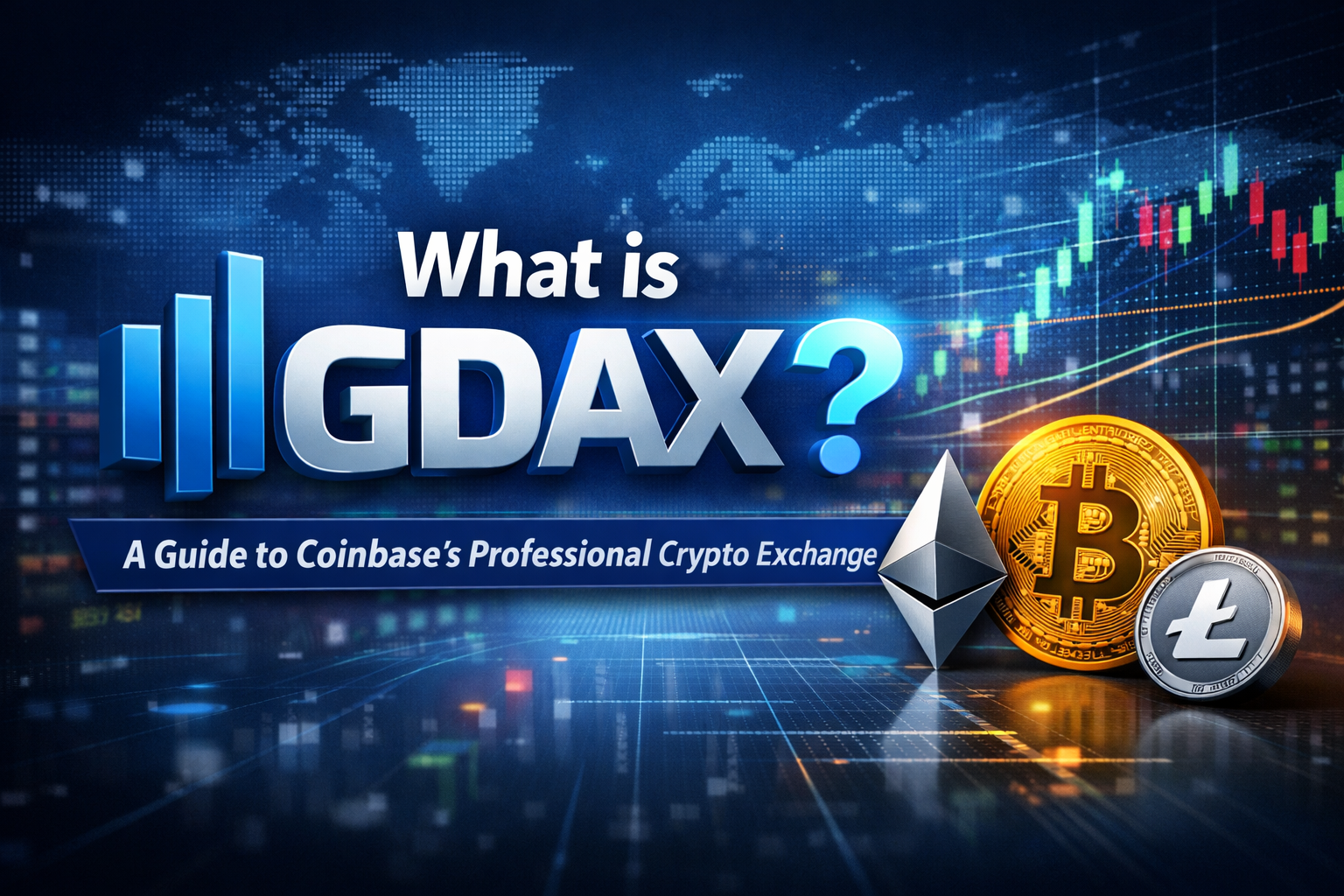
If you have used Coinbase and want more advanced trading tools, you have probably heard of GDAX.
But what exactly is GDAX, why was it created, and how does it compare to other cryptocurrency exchanges?
In this guide, we will break down what GDAX is, why it exists, its key advantages and disadvantages, and whether it is right for beginner or professional traders.
What Is GDAX?
GDAX stands for Global Digital Asset Exchange. It was launched in 2016 when Coinbase rebranded its exchange product to serve more serious traders.
GDAX was designed to offer:
- Retail trading access
- Institutional investor tools
- Professional trading features
- Access to major cryptocurrencies like Bitcoin, Ethereum, and Litecoin
Unlike the simple Coinbase mobile wallet interface, GDAX focused on real time charts, order books, limit orders, and lower trading fees.
Because it leveraged Coinbase’s infrastructure, existing Coinbase users could easily sign in and begin trading without creating a separate account from scratch.
Why Was GDAX Created?
GDAX was created to expand beyond the simplicity of the Coinbase mobile app and wallet.
While Coinbase made it easy to buy and store crypto, more experienced traders needed:
- Advanced order types
- Lower fees
- Higher liquidity
- Professional charting tools
- Faster execution
GDAX filled that gap.
It allowed Coinbase users to transition from beginner investing into active trading without leaving the ecosystem.
Key Features of GDAX
1. Competitive Trading Fees
One of GDAX’s biggest advantages was its lower fee structure compared to standard Coinbase purchases.
For active traders, lower fees can significantly improve long term profitability.
2. High Liquidity
Liquidity refers to how easily you can buy or sell an asset without affecting its price.
GDAX maintained strong trading volume, which meant:
- Faster trade execution
- Less slippage
- Easier exits during volatile markets
High liquidity is essential if you do not want to get stuck holding an asset during market swings.
3. Integrated With Coinbase
GDAX was built directly on Coinbase infrastructure.
This meant:
- Easy transfers between Coinbase wallet and GDAX
- Familiar security framework
- Smooth onboarding for existing users
If you already used Coinbase, moving to GDAX was seamless.
4. Bank Transfer Support
GDAX supported bank transfers, making it easier for users to deposit and withdraw funds.
This helped bridge the gap between traditional finance and digital assets.
5. US Regulatory Compliance
GDAX operated as a regulated exchange in the United States and held a New York BitLicense.
Regulatory oversight added credibility and trust, especially for institutional and professional investors.
6. Strong Security Record
At the time of its operation under the GDAX name, the exchange had not experienced major hacks.
Security was reinforced by Coinbase’s established infrastructure for storing funds and protecting private information.
Who Is GDAX Best For?
GDAX positioned itself as a platform for:
- Experienced crypto traders
- Professional investors
- Institutions
- Active retail traders
That said, beginners could still use it if they were comfortable with:
- Order books
- Limit orders
- Market depth charts
If you only want to buy and hold cryptocurrency, the standard Coinbase interface may feel simpler.
If you want tighter spreads and lower fees, GDAX offered more flexibility.
The Pros of GDAX
Here are the biggest advantages:
- Competitive low fees
- Strong liquidity and trading volume
- Integration with Coinbase wallets
- Bank transfer support
- US regulatory compliance
- Established infrastructure
- Popular among both beginners and professionals
Because of its liquidity and market share, GDAX became one of the largest exchanges by trading volume at the time.
The Cons of GDAX
No platform is perfect. GDAX had some drawbacks.
1. Limited Altcoin Selection
Compared to some international exchanges, GDAX did not offer a wide range of altcoins.
Altcoins refer to cryptocurrencies that are not Bitcoin.
Traders looking for smaller, newer tokens often needed to use other platforms.
2. Customer Support Concerns
One of the most common criticisms was customer support.
Like many fast growing crypto companies, support response times could be slow during peak demand.
In volatile markets, this can be frustrating for traders who need quick assistance.
Is GDAX Still Relevant Today?
GDAX was later rebranded again under Coinbase’s professional trading platform. However, understanding GDAX is important because it represents Coinbase’s move into serious exchange level trading.
It marked the transition from simple crypto buying and holding to full scale digital asset trading infrastructure.
Final Thoughts
GDAX played a critical role in the evolution of Coinbase’s trading ecosystem.
It offered:
- Lower fees
- Higher liquidity
- Advanced trading tools
- Regulatory credibility
- Seamless integration with Coinbase
For traders who wanted more control and better execution than the standard wallet interface, GDAX was a strong choice.
Whether you are a beginner exploring crypto or a professional seeking liquidity and lower fees, understanding platforms like GDAX helps you navigate the digital asset market more strategically.
In crypto, execution matters. Fees matter. Liquidity matters.
And exchanges like GDAX were built to serve exactly that need.


Leave A Comment